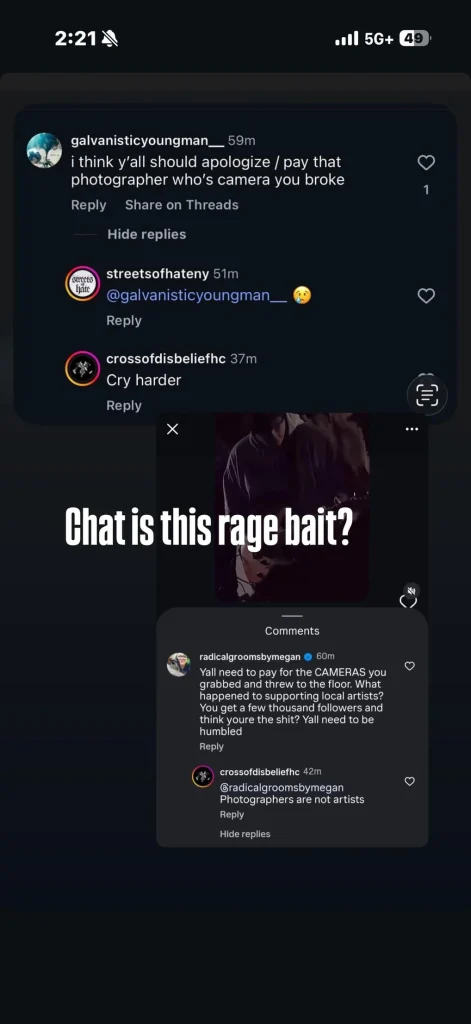
Sänger von Cross Of Disbelief zerstört Kamera einer Fotografin und behauptet, „Fotografen seien keine Künstler“

Bei einem Hardcore-Konzert der Band Cross Of Disbelief, das am 8. Januar in den Räumlichkeiten von Granskis Records in Augusta (USA) stattfand, kam es zu einem Vorfall, der die Musik- und Fotografen-Community aufgewühlt hat. Während des Auftritts griff der Sänger der Band körperlich in die Arbeit der Konzertfotografin Kayle Boshard ein, riss ihr die Kamera aus den Händen und schleuderte sie zu Boden, wobei das Equipment ernsthaft beschädigt wurde.
Die Fotografin war für das Event offiziell engagiert worden – es handelte sich also nicht um eine zufällige Besucherin mit Kamera, sondern um eine Person, die ihren Job erledigte. Nach ihren Angaben näherte sich der Sänger ihr während des Fotografierens und griff dann ohne jede Vorwarnung oder verbalen Konflikt nach ihrer Kamera und zerstörte sie. Trotz Schock und materiellem Schaden blieb sie professionell und arbeitete weiter, soweit es das noch verbliebene Equipment zuließ.
Dabei blieb es nicht. Cross Of Disbelief veröffentlichten kurz darauf auf ihren Social-Media-Kanälen ein Statement, das zusätzlich Öl ins Feuer goss. Darin erklärten sie unter anderem, dass „Fotografen keine Künstler seien“, und ergänzten den provokativen Kommentar „Cry harder“. Diese Haltung löste eine Welle der Empörung aus, denn Konzertfotografen sind ein unverzichtbarer Teil der Musikszene – nicht nur als Dokumentaristen von Events, sondern als Schöpfer der visuellen Identität von Bands, Touren und Festivals.
Zahlreiche Musiker, Konzertveranstalter und Fotografen stellten sich öffentlich hinter Kayle Boshard und betonten, dass gerade Fotografen es oft sind, die für minimales Honorar oder sogar ehrenamtlich das visuelle Archiv einer Szene schaffen, das noch lange nach dem Ende eines Konzerts bestehen bleibt. In der Hardcore- und Punk-Community, die sich oft auf Werte wie Respekt, Gleichheit und Zusammenhalt beruft, wurde dieser Vorfall daher als besonders problematisch empfunden.
In den sozialen Medien haben sich bereits Stimmen gemeldet, die fordern, Cross Of Disbelief künftig nicht mehr auf Festivals und Touren zu buchen, bis die Band sich für das Geschehene entschuldigt und die Verantwortung für den verursachten Schaden übernimmt. Der Fall hat erneut eine breitere Debatte über den Respekt gegenüber kreativer Arbeit in der Musikindustrie angestoßen – nicht nur auf der Bühne, sondern auch daneben.
Zusätzliches Gewicht erhält die ganze Situation durch die Tatsache, dass Cross Of Disbelief derzeit keine Headliner sind, sondern lediglich als Vorband (opening act) bei kleineren Konzerten auftreten. Obwohl sie in den sozialen Medien nur einige tausend Follower haben und ihre Bekanntheit noch im Aufbau ist, wirkte die Reaktion der Band so, als handle es sich um eine etablierte Band mit unangreifbarem Status. Diese Haltung – im Ton fast messianisch – ist in einer Underground-Szene umso unverständlicher, wo Glaubwürdigkeit nicht durch Arroganz aufgebaut wird, sondern durch Arbeit, Respekt und den Umgang mit der Community.
Redaktionskommentar: Wenn Ego vor Respekt tritt
Wer im Jahr 2026 noch immer behauptet, Konzertfotografen seien keine Künstler, bei dem liegt das Problem nicht in der Fotografie – sondern im Verständnis von Kunst. Zu behaupten, eine Person, die mit visueller Sprache Energie, Emotionen und die Identität von Musik einfängt, sei kein Kreativer, ist nicht nur ignorant, sondern auch gefährlich abwertend.
Noch schlimmer ist, dass sich ein solches Denken in der physischen Zerstörung von fremdem Equipment äußert. Eine Kamera ist kein Requisit, kein Spielzeug und kein Symbol für die Frustrationen eines Performers – sie ist ein Arbeitsinstrument, oft mehrere tausend Euro wert, das Fotografen aus eigener Tasche finanzieren. In den meisten Fällen sind das Menschen, die der Szene mehr geben, als sie von ihr bekommen.
Die Hardcore- und Punk-Szene hat jahrzehntelang ihre Identität auf DIY-Ethik, Solidarität und gegenseitigem Respekt aufgebaut. Ein Fotograf, der neben der Bühne steht, ist nicht der Feind einer Band, sondern ihr Archivar, Chronist und Verbündeter. Ohne diese Menschen würde ein Großteil der Bands visuell unsichtbar bleiben, ihre Geschichte fragmentiert und vergessen.
„Cry harder“ ist kein Aufstand, keine Provokation und kein Punk. Es ist bloß eine arrogante Verweigerung von Verantwortung. Echter Aufstand bedeutet, die Konsequenzen des eigenen Handelns zu tragen, sich zu entschuldigen und allen gegenüber Respekt zu zeigen, die die Szene mitgestalten – auch denen ohne Mikrofon.
Wenn eine Band den Wert anderer Formen von Kreativität nicht versteht, dann braucht sie vielleicht nicht die Szene – sondern eine grundlegende Lektion in Sachen Respekt.
ENGLISH: Cross Of Disbelief Vocalist Breaks Photographer’s Camera, Claims „Photographers Are Not Artists“
A hardcore show by Cross Of Disbelief on January 8th at Granskis Records in Augusta, Georgia has sparked widespread outrage across the music community. During the band’s performance, the vocalist forcibly grabbed the camera of concert photographer Kayla Boshard, who had been officially hired to document the event, and threw it to the ground, causing significant damage to the equipment.
According to Boshard, the incident happened without warning. While she was doing her job near the stage, the singer approached her and suddenly ripped the camera from her hands. Despite being visibly shaken and facing costly damage, she remained professional and continued working with the gear she had left.
The situation escalated further when the band addressed the incident on social media. In a now widely criticized post, Cross Of Disbelief claimed that „photographers are not artists“ and added the dismissive phrase „Cry harder.“ The statement was met with immediate backlash from photographers, musicians, promoters, and fans alike.
Concert photographers play a crucial role in underground and heavy music scenes, often working long hours for little pay to visually preserve moments that define bands, tours, and entire subcultures. Many within the hardcore community pointed out the irony of a genre built on DIY ethics and mutual respect openly attacking another form of creative labor.
Since the incident, numerous voices within the scene have called for accountability, urging promoters and festivals to reconsider booking the band unless a public apology and compensation for the damaged equipment are made. The controversy has reignited an important discussion about respect, professionalism, and the value of all creative contributors within the live music ecosystem — not just those standing on stage.
What further amplifies the controversy is the fact that Cross Of Disbelief are currently touring as an opening act, not as headliners. Despite having only a few thousand followers across social media platforms and still being in an early growth phase, the band’s reaction suggested a level of entitlement more commonly associated with untouchable legacy acts. This almost messianic attitude feels especially out of place within an underground scene where credibility is earned through hard work, humility, and respect — not ego-driven posturing.
Editorial Comment: When Ego Replaces Respect
If someone in 2026 still claims that concert photographers are not artists, the problem isn’t photography — it’s a fundamental misunderstanding of what art actually is. To dismiss a person who captures energy, emotion, and the identity of music through a visual language as „not creative“ is not only ignorant, but deeply disrespectful.
What makes this even worse is that such thinking was expressed through the physical destruction of someone else’s equipment. A camera is not a prop, not a toy, and not a tool for venting an artist’s frustration. It is professional work equipment, often worth thousands of euros, paid for out of photographers‘ own pockets. In most cases, these are people who give far more to the scene than they ever get back.
Hardcore and punk scenes have long been built on DIY ethics, solidarity, and mutual respect. A photographer at the edge of the stage is not the band’s enemy — they are its archivist, its chronicler, and its ally. Without them, many bands would remain visually invisible, and entire chapters of scene history would simply disappear.
The statement „Cry harder“ is neither rebellion nor provocation. It is simply an arrogant refusal to take responsibility. Real defiance means owning your actions, apologizing when you cross a line, and showing respect to everyone who helps build the scene — including those who don’t hold a microphone.
If a band fails to recognize the value of other forms of creative work, then perhaps it isn’t the scene that needs them — but the band that needs a basic lesson in respect.
Video (Originalno objavljen na Reddit /Hardcore via QSLY):